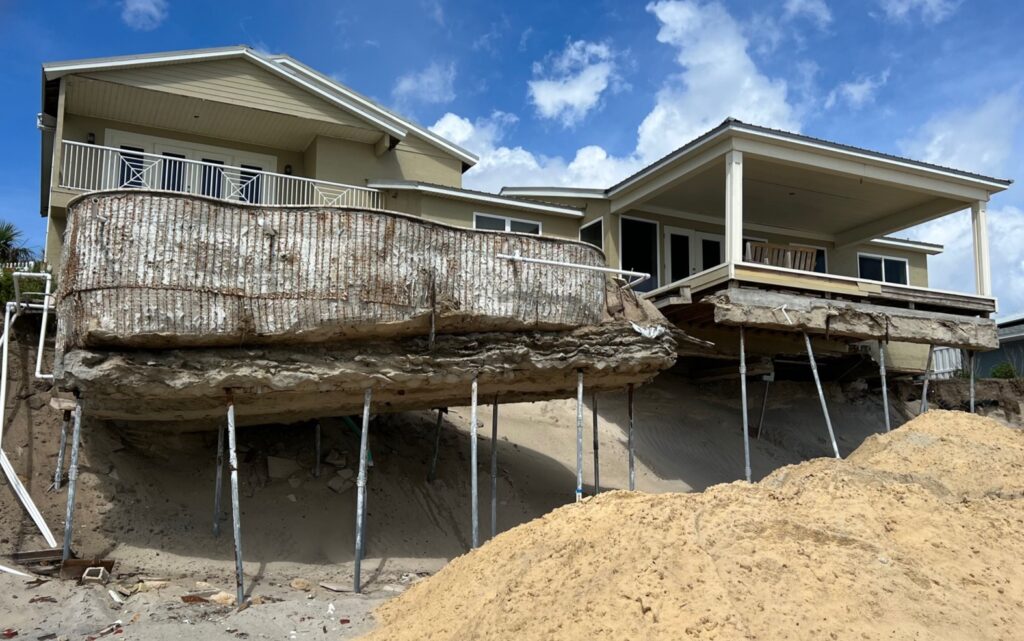
Most foundation problems do not show up as one big disaster. They start as “little” things you ignore. A door that sticks. A soft spot in the floor. A small crack that keeps coming back. Then one season of heavy rain or one storm later, the home feels different, and not in a good way.
In Florida, soil moves. Water changes everything. Wind loads push and pull on the structure. Because of that, the foundation you choose is not just a construction detail. It is the difference between a home that stays level and secure, and a home that slowly shifts year after year.
That is where high set foundations and helical pile foundations come in. Both are designed for challenging conditions, and both can be excellent choices for manufactured homes when they are planned and installed correctly.
What “high set” really means, and why Florida homeowners choose it
A high set foundation is exactly what it sounds like. The home is elevated higher off the ground than a standard setup. People often choose this when they want extra protection from flooding, better drainage, or more clearance in areas that stay wet.
High sets are also common when the site has low spots, poor runoff, or a history of water pooling. Raising the home helps keep water away from the structure. It also gives you more airflow under the home, which can reduce moisture problems over time.
There is another benefit that gets overlooked. A higher elevation can help protect the home during extreme weather because water has fewer chances to press against the underside of the structure and skirting.
Helical pile foundations, what they are in plain English
A helical pile foundation uses steel piles that are screwed into the ground until they reach stable soil. Think of it like anchoring the home to something solid beneath the surface, instead of relying only on the top layer of soil that expands, softens, and shifts.
This matters in Florida because many sites have sandy soil, soft ground, or moisture changes that cause movement. A helical pile foundation can reduce settling and uneven support because the load is transferred deeper into more stable ground.
Just as important, helical piles can provide strong uplift resistance. In storm-prone areas, that extra holding power can be a major advantage.
When a high set foundation makes the most sense
A high set foundation is often the right move when water is the main enemy. If your property floods, holds water, or sits in a low area, elevation can be the simplest long-term protection. Even when flooding is not constant, heavy summer rains can expose weak drainage fast.
High sets also work well when you want more clearance for airflow, access, and future maintenance. If you have ever tried to squeeze under a low home to inspect plumbing or ductwork, you already understand why clearance matters.
When helical piles are the smarter choice
Helical piles shine when the soil is the problem. If the ground is soft, inconsistent, or prone to settling, pushing support deeper can create a more stable foundation than shallow supports alone.
They are also a strong option when you want a foundation solution that reduces disturbance to the site. In many cases, piles can be installed with less excavation than other methods, which can help when access is tight or landscaping matters.
The question that decides everything: water problems or soil problems?
Most homeowners start by asking, “Which foundation is better?” The better question is, “What is actually threatening my home?”
If water is the biggest issue, elevation is usually the first conversation. If the soil is the bigger issue, deeper support is often the answer. Sometimes, the best solution includes both ideas, elevation for clearance and water protection, plus deeper supports for stability.
That is why a professional evaluation matters. Guessing leads to expensive redo work later.
Why “good enough” foundations fail in Florida
Florida is not forgiving. A foundation can look fine and still be wrong for the property. Over time, the signs show up. Floors start to slope. Doors and windows drift out of square. Cracks appear and reappear. Moisture problems become more common because the home is no longer sitting the way it was designed to sit.
What makes it worse is that many homeowners wait until the symptoms are obvious. By then, the fix is often bigger than it needed to be.
What a solid foundation plan should include
A smart plan starts with the property, not with a product. Soil conditions, drainage, elevation, wind exposure, and how the home sits today all matter. The right installer should walk you through the “why” behind the recommendation.
You should also expect clarity about long-term maintenance. Foundations are not only about the install day. They are about how the home behaves during rainy season, during dry season, and during storms.
The payoff most people do not expect
A better foundation does more than protect the home. It restores peace of mind. When the home feels stable, everything feels easier. Floors feel solid. Doors close cleanly. You stop noticing new cracks. You also stop wondering if the next storm will create a new expensive surprise.
That is the real win. A foundation upgrade is not just structural. It is emotional, because you stop waiting for the next problem.
Ready to talk high sets or helical piles for your manufactured home?
If you are seeing signs of settling, moisture issues, or uneven floors, it is worth getting the foundation assessed before the problem grows. High set foundations and helical pile foundations can both be excellent options in Florida, as long as the choice matches the property and the home.